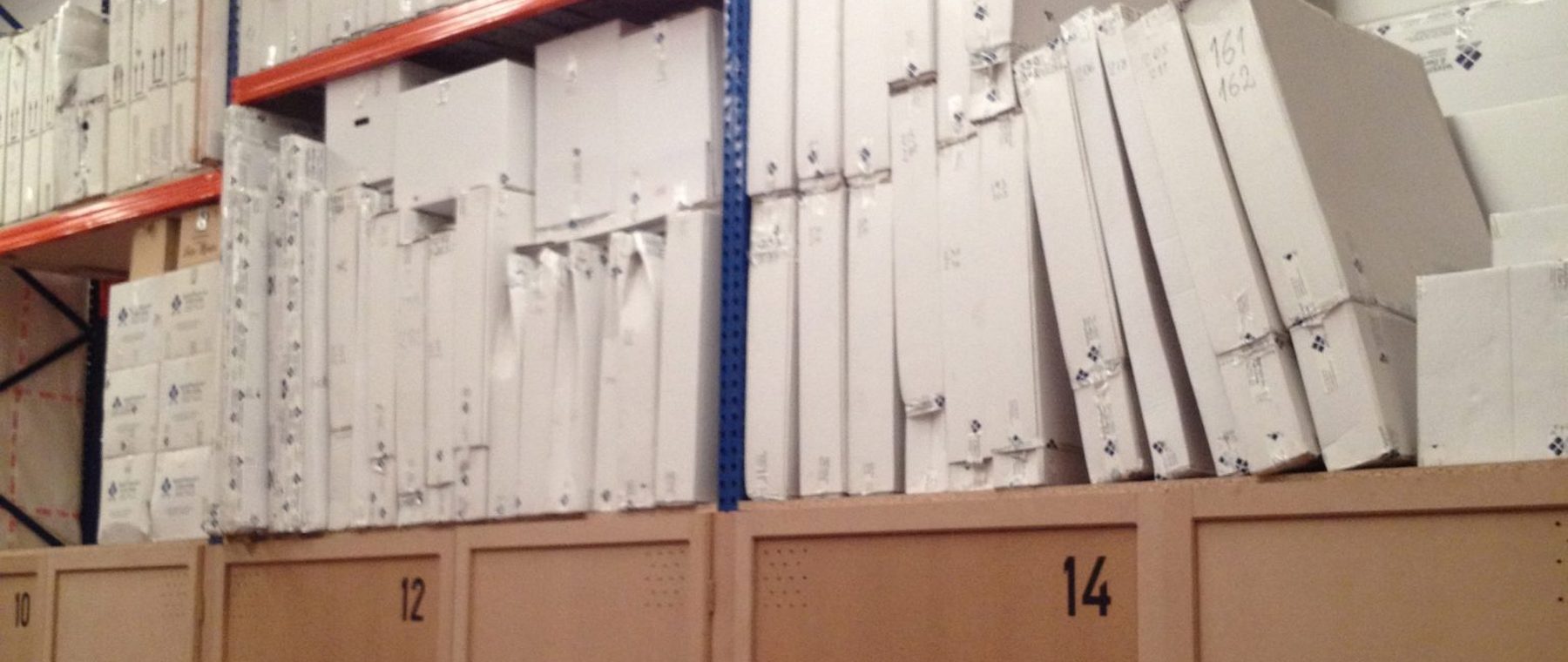
Our specialists will advise you on choosing the best material for the method of transport and the type of object to be moved.
We design any kind of bespoke packing, studied to meet the requirements of the piece being moved, so as to offer the greatest comfort and safety, always choosing the best materials.
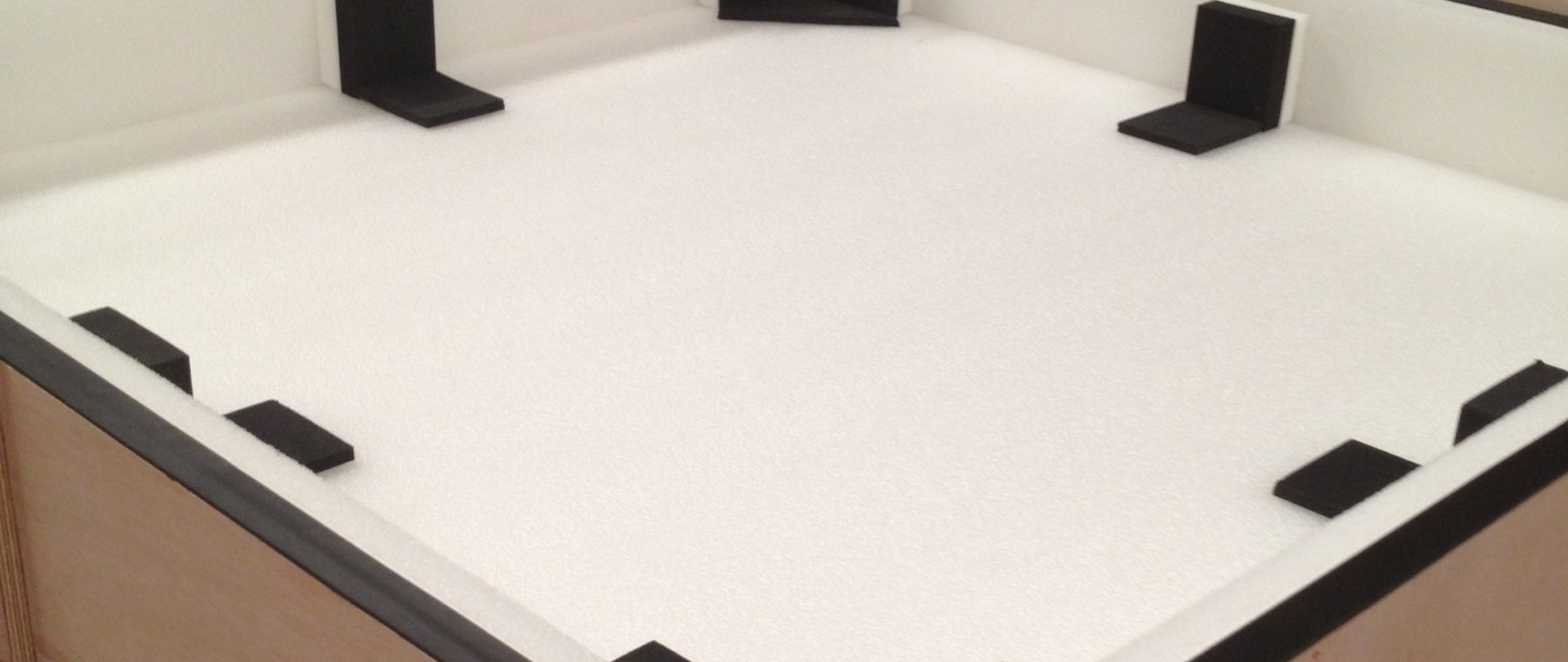
Every crate is lined to protect the work from any vibration or impact.
We have a wide range of packing to suit and individualise each object, piece of furniture or fitting according to its features, and to that end we build both two-dimensional and three-dimensional crates. Within the two-dimensional crates, three types can be distinguished according to the protection they offer:
01 Basic crate
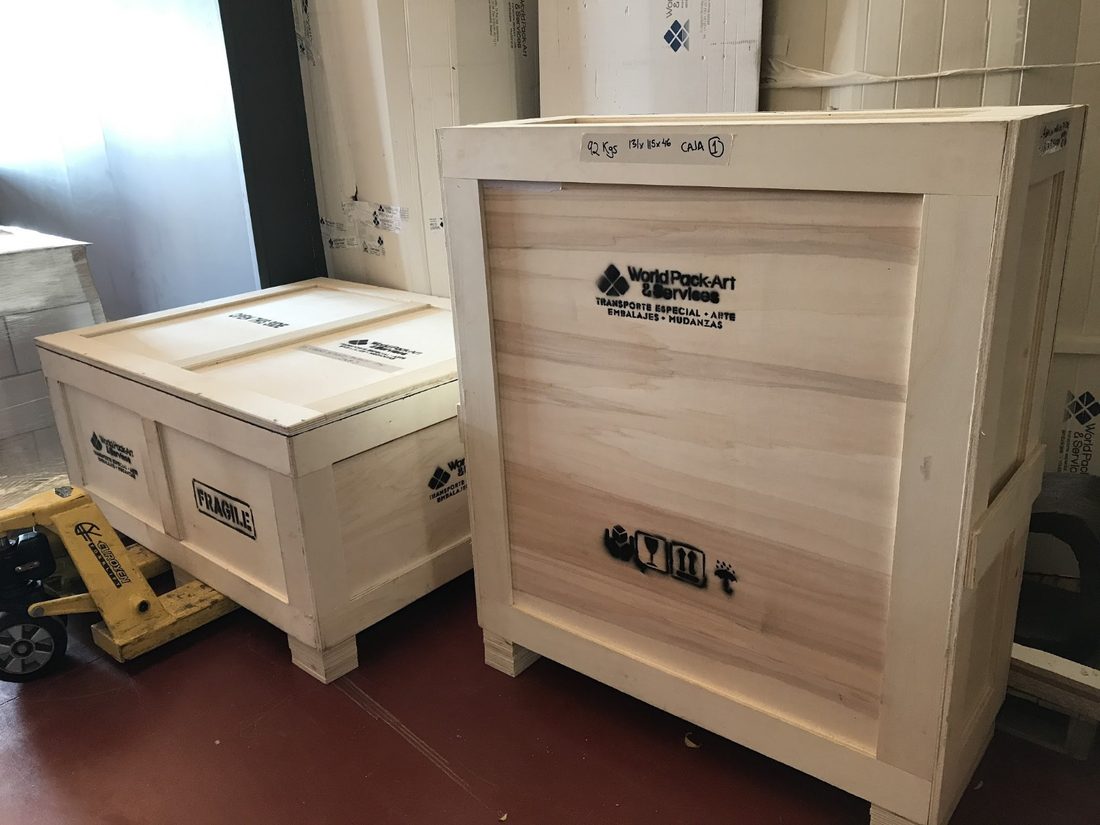
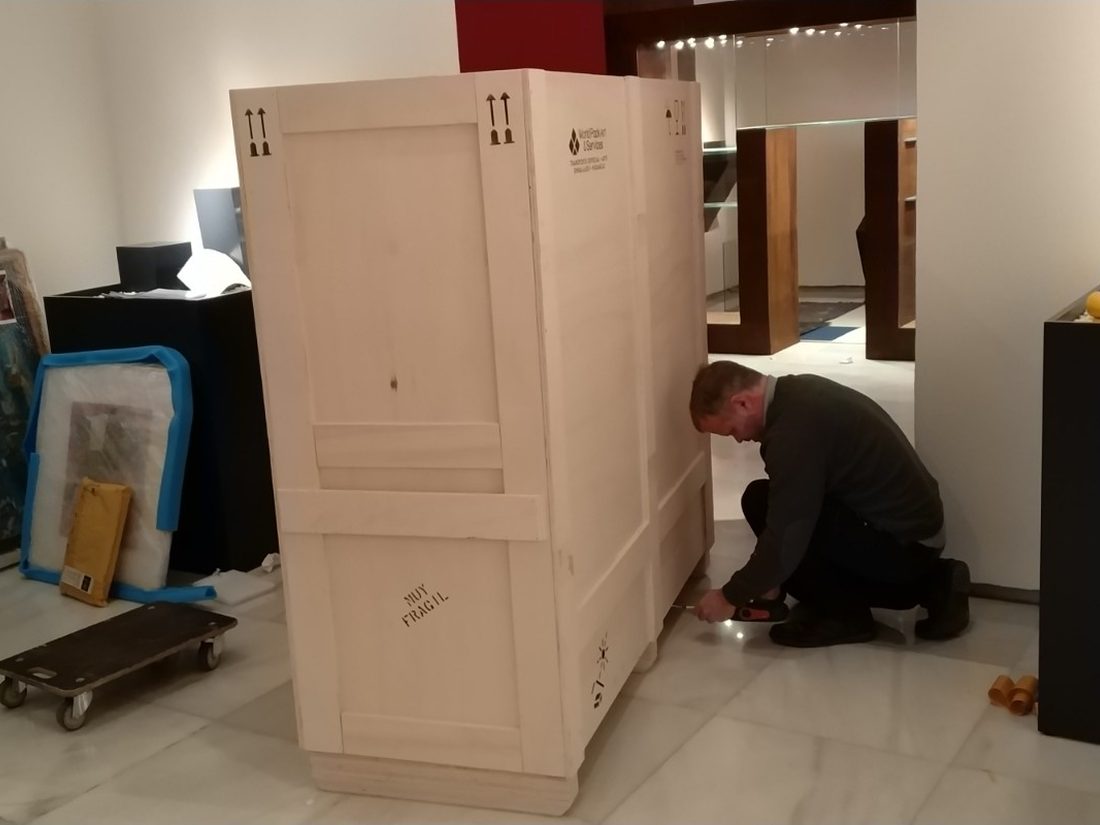
This is the most widespread and standardised version on the market, offering good levels of protection against sudden changes in relative humidity and against vibration. This crate is built from okoumé plywood between 7 and 10 mm thick on the lid and the base, while on the sides the thickness increases to 10–15 mm. The perimeter is reinforced with battens that strengthen the structure and prevent the timber from deforming under pressure.
The inside of the crate is lined on every face, the lid included, with an insulating layer of polystyrene foam at least 5 mm thick, which protects the work from vibration and from changes in relative humidity, with the work resting on polyethylene foam corner blocks of 25 kg density. Both the lid joints and the sides are sealed with rubber to prevent the transmission of vapours harmful to the work.
To make the crate more airtight, the edge that meets the lid has a neoprene strip bonded to it, a material that acts as a barrier: it markedly reduces the effect of outside relative humidity and temperature, creating a stable atmosphere inside the crate. This type of crate is closed with stainless steel plates and screws.
02 Climate-controlled crate
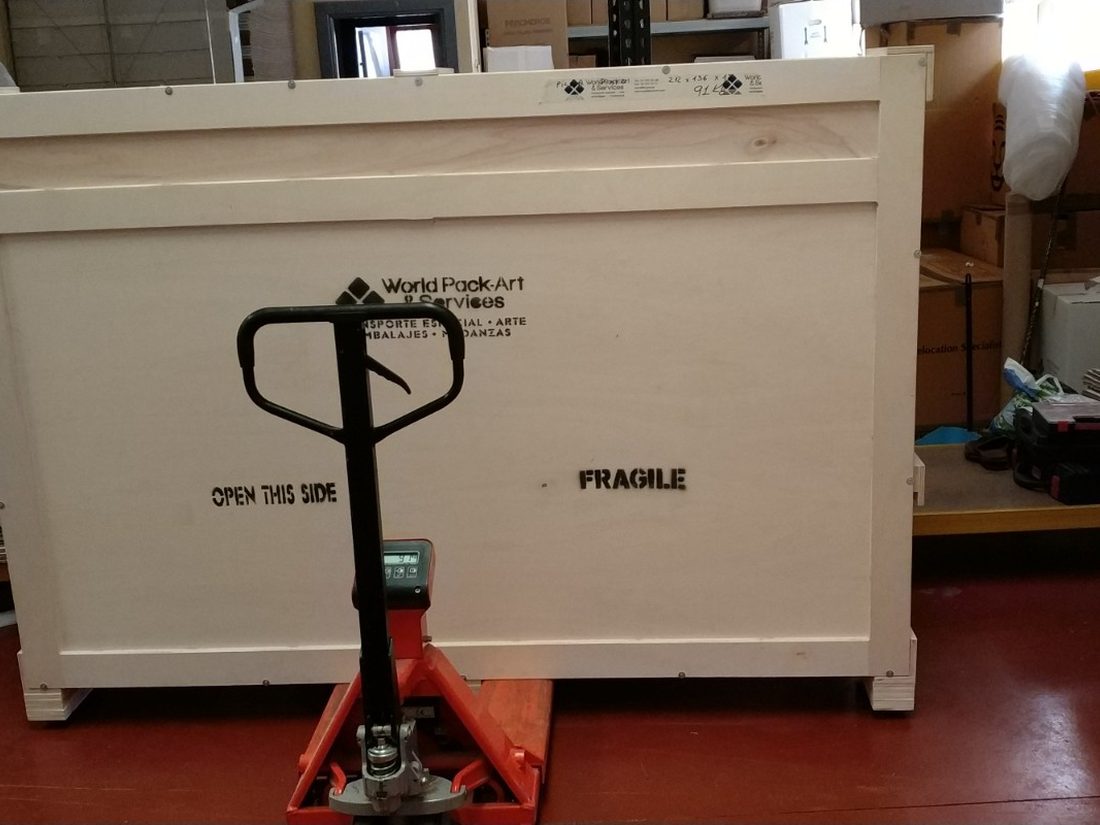
The outside is also built in okoumé plywood, but here the thickness is increased by around 3 or 4 mm and a laminate covering is added to the outer surface, which makes the crate more airtight and keeps chemical agents out. The main difference, however, is inside the crate: the polystyrene foam layer increases to 50 mm thick.
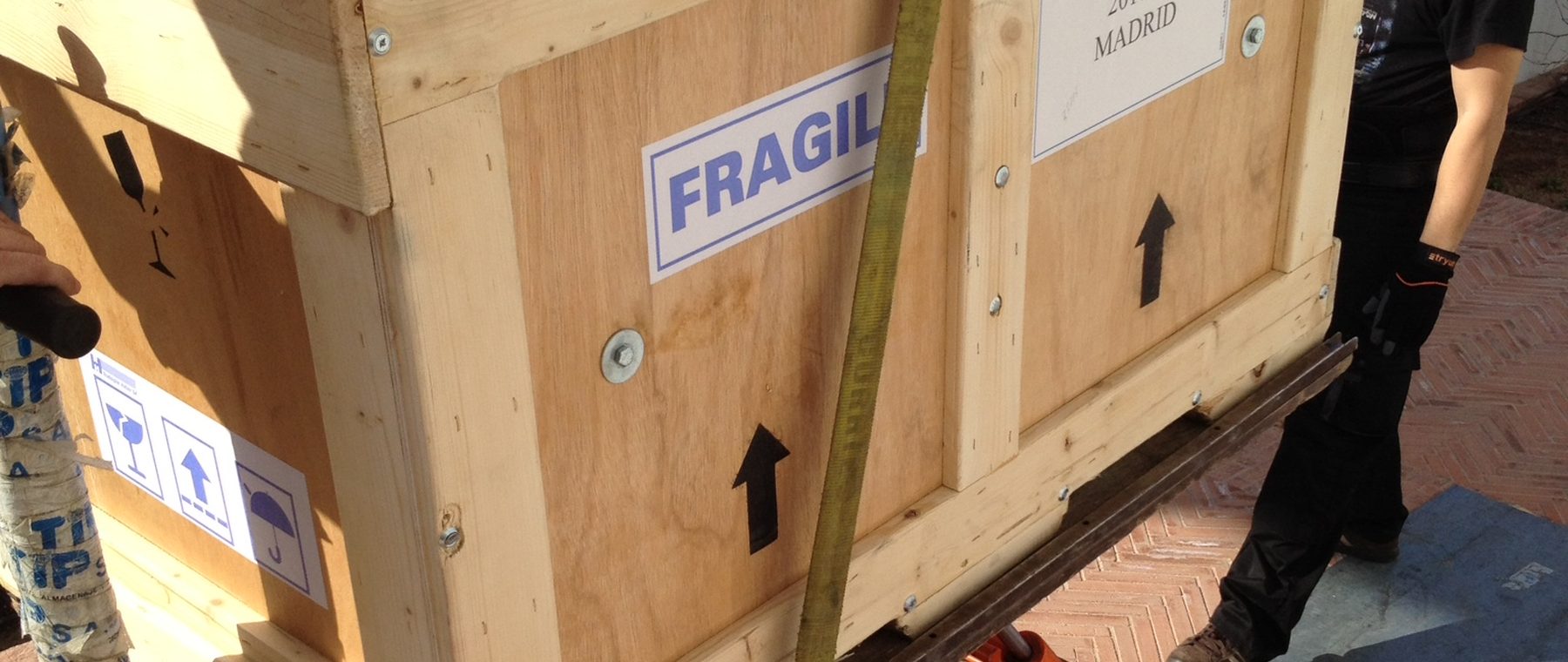
The handles must be metal, retractable if possible, given the greater size and weight of this type of crate.
03 Museum crate
The timber structure of this type of crate is built to the same dimensions as the climate-controlled one, but the thickness of the sides is increased to 22 mm. The outside also has a laminate layer, reinforced sides and corners, and rubber treatment.
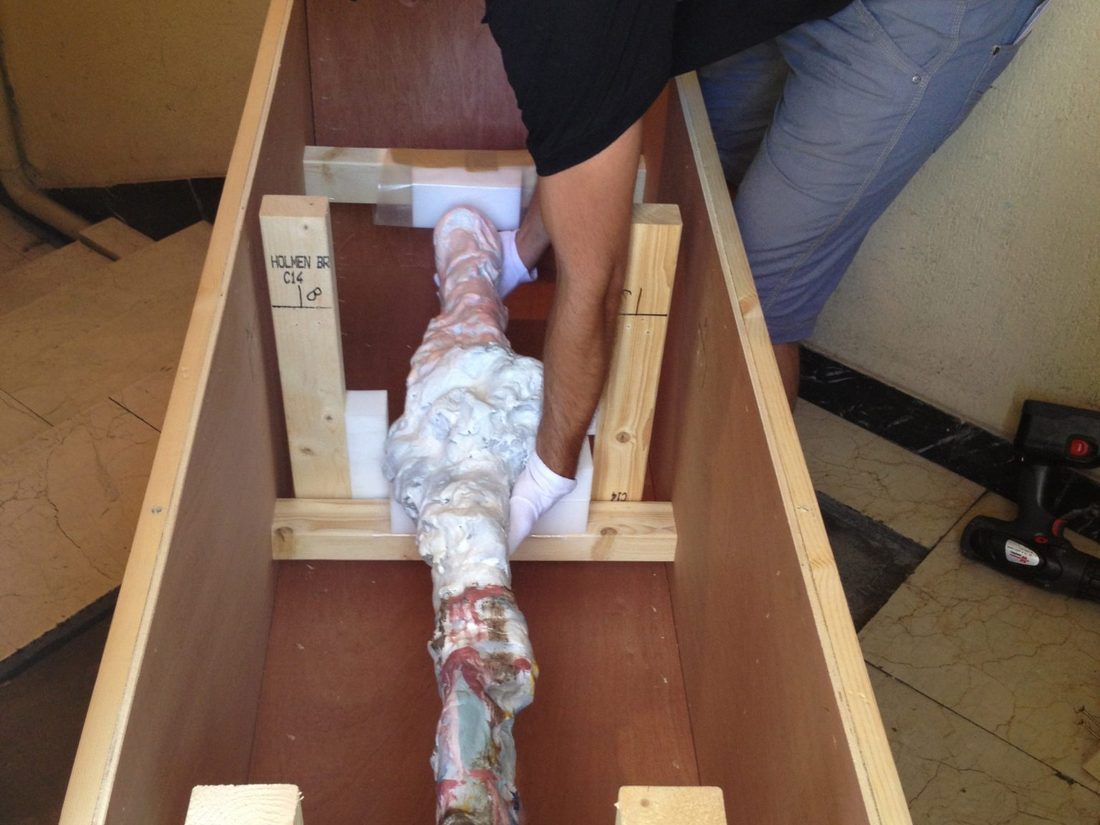
The inside is lined with a 20 mm layer of polystyrene, and to stop the foam from deteriorating as the lid is opened and closed, a layer of cloth tape is applied to the upper edges to prevent tearing and wear. As for crates for three-dimensional objects, the only real difference between a crate for a two-dimensional work and one for a three-dimensional work is the size of the interior space.
With sculpture, therefore, no specific arrangement of bearing points can be laid down, because every work needs its own.
This type of packing normally opens at the lid and at one of the sides, which makes the piece easier to put in and take out.
From this service