One of humanity’s creations of greatest value is its works of art, which have developed throughout history and are still being made day by day. Works that express feelings, sensations, moments, motives and important events, and that are worth valuing and preserving. These objects, which express what an artist and their followers feel, may be shown in galleries for everyone to enjoy, or form part of the private collections of those who know the field. Whatever their origin, works of art often have to be moved from where they sit, and in that case important considerations have to be taken into account in order to avoid any mishap that might damage so important an object.
01 Which objects do we consider works of art?
The term work of art refers to the product of artistic creation, that is, the product of an artist’s work. For many it also refers to the admiration one may feel for a successful piece of work. We could therefore say that works of art have representatives in every area of human creation. Works of art beautify our spaces, stimulate our senses and bring feelings to the surface. The pieces that produce these majestic effects can come to have incalculable value. The works of famous artists are often shown in museums or galleries, but they may also be privately owned and therefore often inaccessible to the public. In museums, works of art form collections for the public to enjoy; in galleries they are available for sale, allowing artists to benefit financially from their work. Among the pieces of art we can acquire readily are paintings and sculpture. But bear in mind that owning a work of art brings an important responsibility with it, since these pieces warrant special care if we want them to be preserved for a long time and not to lose their value. Once you have bought and received your work of art, it is important to consider the best ways of looking after it. In the case of preserving paintings, framing your work will improve how it is presented and will protect it from damage.
02 Advice on caring for works of art
When framing your work it is always advisable to use mounts to create a space between the work and the glass, so as to avoid any friction between the surfaces, or the damp that could eventually cause damage — because if your work is on paper, it can stick to the glass over time. Make sure the materials that come into contact with your work are acid-free, to prevent yellowing and discoloration. Try also to avoid a cheap frame, since that could work against you in the long run. The best frames often come prepared with glass and fittings, and the hanging hooks are already fixed, which makes them easier to position in your spaces. If you are not sure which frame works best, we recommend consulting a framing professional for the best options. As an additional recommendation on frames, we suggest sticking industrial-grade framing tape around the edges of the backing board of a glazed frame. That will cover the gaps and keep dust particles out. Oil paintings do not need a glazed frame, especially where the work has been produced on canvas. All works of art in general need a very cautious cleaning process. If the frame you have chosen has glass, it keeps dust from settling on the work, but a window cleaner and a soft cloth should be used to clean off any build-up of dirt that may have gathered over time. Never use a cleaning agent directly on the surface of a canvas, as it can be harmful. It can also leave an unwanted residue on the surface and ruin or reduce the value of the work. Acrylic or oil paintings stretched over a reinforced wooden stretcher can be framed, but it is not really necessary: the wooden stretcher acts as a mounting box in itself, which means it needs neither a glazed frame nor a mount. The hanging fittings can be fixed directly to the wooden stretcher at the back of the canvas. Try to avoid using staples to hold the hanging wire, since gravity and the weight of the work can pull on it, stretch the wire and loosen the fixing over time. It is better to secure the wire with small hooks on each side of the frame. We recommend a thick or stainless steel hanging wire, because it is stronger and less likely to leave marks on the wall. It is important to think carefully about where your work will go: make sure it sits well with the decoration and the furniture of the home. Relate the work to a combination of elements such as the size of the wall, symmetry, alignment, mood, the colour schemes of the home and the lighting conditions, and then weigh that against how it will fit the space. Keep your work away from hazards such as liquids and heat. Try to hang it away from damp areas that attract a lot of dust or mould, avoid hanging it near other furniture, protect it from the weather by hanging it well away from windows and swinging doors, and remember that exposure to direct sunlight is not advisable.
03 Art transport service
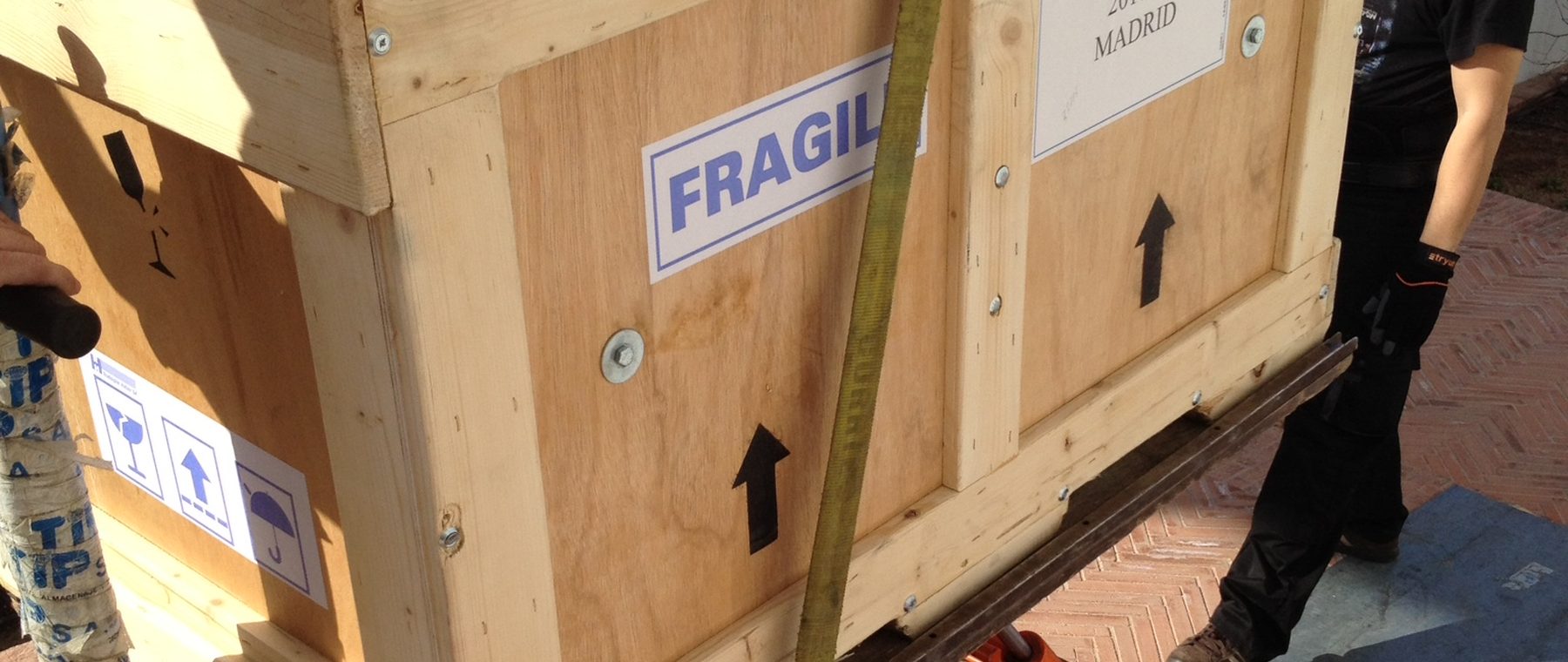
Whether because of a house move or any similar process, your works of art will need to be moved at some point. In that case you should take additional precautions, on which experts ought to advise you, so as to avoid any damage to your valuable property. For transport it is important to use bubble wrap or foam for the packing and to have a crate built to measure. When the work is being moved it is also important to make sure nothing else is placed on top of it, and to keep it away from the sharp edges of other objects. When the process is over, keep the original packing and the bubble wrap crate in case of delivery or transport in the future. Hang your work as soon as possible to avoid damage, keeping it away from hostile conditions such as direct sunlight, damp and dust. For storage, avoid damp or dusty areas and sharp objects. Keep the work flat and well insulated inside the crate packing. It is important not to place other objects on top of the work. If damage occurs to the work or the frame in future, do not try to repair it yourself; find an art conservator or a framer for repairs. To take care of every detail of the specialist art transport process we recommend asking for expert help, and for that, get in touch with PACK-ART if you are in Madrid. Contact us!